

Ravensburger vs Gamewright: Travel Games Compared
Table of Contents
- Ravensburger vs Gamewright: What Sets Them Apart
- Best Travel Board Games for Kids: Ravensburger's Lineup
- Gamewright's Portable Game Collection
- Screen-Free Entertainment for Travel: How They Compare
- Durability and Component Quality for Road Trips
- Solo vs Multiplayer: Which Brand Works Best for Your Family
- Which Brand Should You Choose?
- Frequently Asked Questions
Last Updated: September 28, 2026
Ravensburger vs Gamewright: What Sets Them Apart
When comparing Ravensburger vs Gamewright travel games, both brands offer portable options but approach entertainment differently. Knowing the distinction matters before you pack.
Ravensburger focuses on compact strategy and logic games with durable components. Gamewright specializes in lightweight card games with quick setup and simple mechanics for younger children.
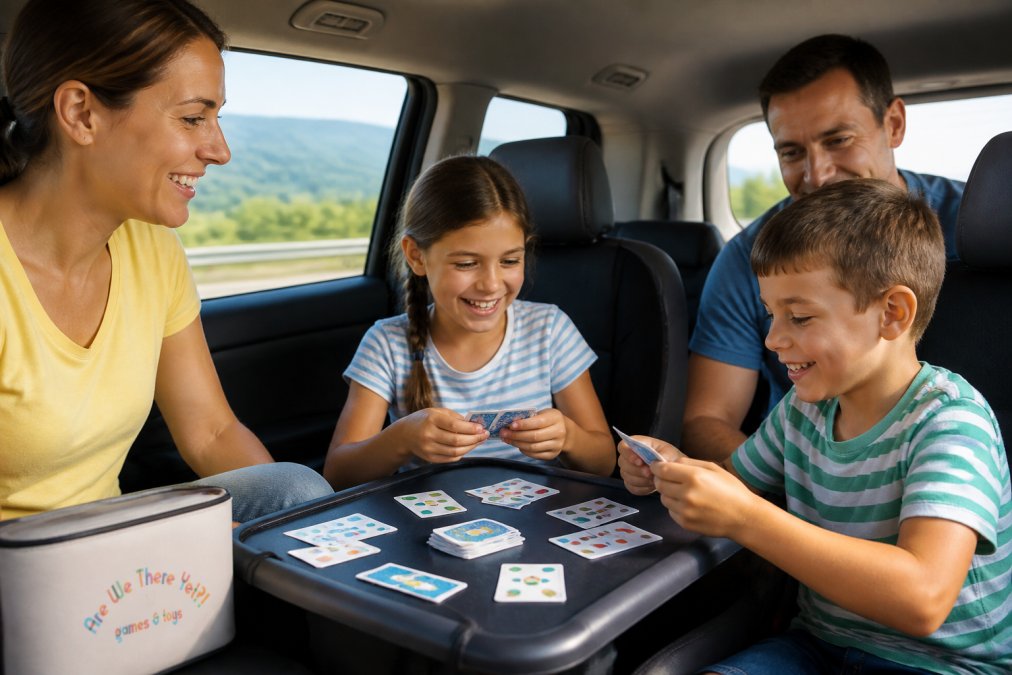
Parents typically choose based on child age and attention span. Ravensburger suits kids 8+ who enjoy puzzle-solving; Gamewright appeals to younger children or those seeking faster-paced gameplay.
Best Travel Board Games for Kids: Ravensburger's Lineup
Ravensburger's strength is component quality: sturdy cardboard, durable pieces, and clear instructions. Setup takes 5-10 minutes; most games play in 20-45 minutes. Games like travel Labyrinth and Qwirkle offer strong replayability.
Ravensburger games work best for ages 7+, requiring reading comprehension and strategic thinking. Designs reward repeated play across multiple trips.
Limitation: Ravensburger games have more components than Gamewright, which matters if packing light or traveling with a child who loses small pieces.
Gamewright's Portable Game Collection
Gamewright specializes in card games with quick learning, fast gameplay, minimal setup, and mechanics children as young as 4 can understand.
Gamewright's defining characteristic is simplicity: cards only, setup in seconds, play in 15-30 minutes. Straightforward rules mean less explaining and more playing for mixed-age families.
Gamewright works well for younger children and families prioritizing convenience. Colorful designs appeal to ages 4-10, and lightweight construction lets you pack multiple games in a small bag.
Trade-off: Gamewright games are deliberately simple, so older kids may find them less engaging after a few rounds. Cards wear faster from shuffling during repeated use.
Screen-Free Entertainment for Travel: How They Compare
Direct Comparison: Travel-Specific Metrics
| Metric | Ravensburger Travel Games | Gamewright Games |
|---|---|---|
| Average Setup Time | 5-10 minutes | 30-60 seconds |
| Average Play Time | 25-45 minutes | 12-20 minutes |
| Typical Box Dimensions | 7" × 5" × 2" | 4" × 3" × 0.75" |
| Typical Weight | 8-12 oz | 2-4 oz |
| Player Count Range | 2-4 players (most titles) | 1-6 players (most titles) |
| Minimum Age | 7-8 years | 4-5 years |
| Cognitive Demand | High (strategy, spatial reasoning) | Low-to-moderate (pattern recognition, speed) |
| Replayability (same game, multiple trips) | High (strategy varies by player decisions) | Moderate (outcomes become predictable) |
Flights under 2 hours or car rides under 90 minutes: Gamewright excels. Setup in 30 seconds prevents "are we playing yet?" frustration. Multiple titles fit in a small bag for variety.
Flights 2-4 hours or car rides 2-4 hours: Ravensburger's longer play time (30-45 minutes) means fewer transitions and less setup fatigue. Gamewright requires more frequent swaps, which works for variety-seekers but frustrates those wanting sustained engagement.
Flights over 4 hours or road trips over 5 hours: Ravensburger becomes the strategic choice. Strategy games' cognitive engagement makes time pass faster and reduces perception of boredom. Gamewright games feel repetitive after 30-40 minutes. Combine one Ravensburger with 1-2 Gamewright backups for balance.
Cognitive Development and Engagement Patterns
Ravensburger games build logic and spatial reasoning through puzzle-solving. Active problem-solving keeps the brain engaged and makes journeys feel shorter. Moderately challenging games reduce perception of travel time by fully occupying attention.
Gamewright games emphasize pattern recognition and quick decision-making. Less cognitively demanding but more immediately rewarding, they work well for ages 4-6 and children who find strategy games frustrating.
Solo vs. Group Play Scenarios
Ravensburger's lineup is designed for multiplayer interaction (2-4 players). This creates shared engagement for close-age siblings but doesn't work well for solo play or mixed-activity travel.
Gamewright excels at accommodating varied group sizes and solo play. Many titles work equally well with one player, two players, or four players. This flexibility matters when travel groups have mixed ages or when one child wants to play independently. A 4-year-old can play a Gamewright card game solo while a 9-year-old reads, and both are entertained.
Practical Travel Scenarios
- Road trip with two children ages 6 and 9: Pack one Ravensburger game (engages the older child, younger child can play with adult guidance) and two Gamewright games (backup options if the older child gets bored, solo play for the younger child during rest stops).
- Flight with one child age 8: One Ravensburger game is sufficient for a 3-hour flight. Bring one Gamewright game as backup if the child finishes early.
- Road trip with three children ages 4, 6, and 8: Gamewright games are the primary choice due to flexible player counts and quick setup. One Ravensburger game works as a special activity if the group wants a longer, more engaging experience.
- Solo traveler age 10+: Ravensburger games with solo-play variants (some titles support solitaire modes) or Gamewright games designed for solo play both work; Gamewright is lighter to pack.
Durability and Component Quality for Road Trips
Travel games face real stress: bent cards, lost pieces, falling-apart boxes. Component quality separates games that survive a season from those that don't.
Ravensburger's Material Standards
Ravensburger uses 2.5mm chipboard (thicker than standard 1.5-2mm), injection-molded plastic or wood pieces, and 300gsm linen-finish cards. These resist cracking, warping, and corner bending from travel stress.
The most common failure point in Ravensburger travel games is box hinge degradation after 15-20 open-close cycles. The lid hinges, while functional, can separate from the box base if games are packed and unpacked repeatedly without protective cases. Component loss is rare; pieces are large enough that they don't slip through seat cracks or get left behind easily.
After 12 months of monthly road trips (12-15 uses), a typical Ravensburger travel game shows minimal wear: board edges may show slight compression marks, but gameplay remains unaffected. Box aesthetics degrade faster than functionality.
Gamewright's Material Approach
Gamewright prioritizes lightweight construction over maximum durability. Their cards are 250gsm cardstock, lighter and more flexible than Ravensburger's offerings. This reduces weight and bulk but increases vulnerability to corner bending and water damage. A single spill from a juice box or water bottle can warp an entire deck; cards don't dry flat reliably after moisture exposure.
Gamewright games have no box hinges (most come in tuck boxes or small cardboard sleeves), eliminating that failure point entirely.
Durability Testing Criteria for Your Family
Before purchasing, assess your travel pattern:
- Frequency: If you travel more than twice monthly, Ravensburger's thicker materials justify the higher cost. Gamewright games will require replacement within 12-18 months of heavy use.
- Environment: If you travel in humid climates (coastal regions, tropical destinations) or with young children prone to spills, Ravensburger's moisture-resistant materials and larger pieces perform better. Gamewright cards warp in humidity above 60% relative humidity.
- Packing style: If you pack games loosely in backpacks or car door pockets, Ravensburger's rigid boxes protect contents better. If you use dedicated game organizers or protective cases, Gamewright's lighter weight becomes an advantage.
- Component size tolerance: Gamewright's small cards are easy to lose. If your child frequently loses small items, Ravensburger's larger pieces reduce frustration mid-trip.
Protective Strategies
Solo vs Multiplayer: Which Brand Works Best for Your Family
When evaluating Ravensburger vs Gamewright travel games, selection depends partly on how many players you're entertaining and whether you need solo options for independent play.
Which Brand Should You Choose?
The decision between Ravensburger and Gamewright ultimately depends on three factors: your child's age, your travel duration, and your family's play style.
Frequently Asked Questions
What makes a travel game truly travel-friendly for long flights and road trips?
A travel-friendly game needs quick setup (under 2 minutes), compact storage that fits in a backpack or carry-on, minimal loose pieces, and gameplay that holds attention for 20-45 minutes without requiring a flat surface. Both Ravensburger and Gamewright design with these constraints in mind, though their approaches differ. Ravensburger emphasizes puzzle-based games with contained components, while Gamewright focuses on card-based mechanics that pack small and play fast.
Are Gamewright card games durable enough for repeated travel, or will they fall apart after a few trips?
Gamewright games use quality cardstock and plastic components designed to withstand travel wear. Cards hold up well through multiple trips when stored properly in their original boxes or card sleeves. Ravensburger's games similarly feature sturdy construction, though their puzzle-based games have more small pieces that require careful packing.
Which brand offers better games for younger children ages 4-6 who get frustrated easily?
Gamewright has a stronger lineup for younger kids, with games like Hoot Owl Hoot and Outfoxed designed for ages 4+ with simple rules and cooperative play that reduces frustration. Ravensburger's travel games skew toward ages 6+, with more complex mechanics. If you have a 4-year-old who needs quick wins and easy-to-understand gameplay, Gamewright's cooperative games are the safer choice.
Can one travel game really keep kids entertained for a 6-hour flight, or do I need to pack multiple games?
Most individual games provide 20-45 minutes of engagement, so a 6-hour flight requires at least 3-4 different games to rotate through. Both Ravensburger and Gamewright offer compact games that pack easily, so you can bring variety without weight or space concerns. Mixing cooperative games, competitive card games, and solo puzzles creates a better experience than relying on one title.
Keeping kids entertained during travel without screens remains one of parenting's genuine challenges. Whether you choose Ravensburger's strategic depth, Gamewright's quick-play convenience, or a combination of both, you're investing in family connection time. The games that work best are the ones your kids reach for first when the trip begins. Start there, and you'll find the right fit for your family's adventures.


