

Engaging Activities for 9 Year Olds: Screen-Free Ideas
Last Updated: October 22, 2026
Quick Summary
Engaging activities for 9 year olds combine a challenge with quick wins, letting kids feel capable and see progress within 10-15 minutes. Screen-free options include arts and crafts, reading and writing, cooking, outdoor play, card games, and building projects, many costing nothing and requiring minimal setup.
- The best activities for this age group have the shortest setup time, like a deck of cards or sketchbook, rather than elaborate kits.
- Most engaging activities for 9 year olds cost zero dollars and use supplies already in the house.
- Supervision should match the activity: periodic check-ins for low-risk activities like drawing, but adult presence for cooking, water play, and tool use.
- Independent activities build confidence when kids choose their own project and have a clear end point.
- Small-group activities work best with 2-4 kids to balance cooperation without chaos.
Table of Contents
- Why Engaging Activities Matter for 9 Year Olds
- Indoor Activities for 9 Year Olds That Build Skills
- Outdoor Activities for 9 Year Olds: Adventure and Exploration
- Independent Activities for Kids This Age
- Road Trip Games for Kids: Keeping Boredom Away
- Activities Organized by Time, Budget, and Setup
- Small-Group and Social Activities for Nine Year Olds
- Safety, Supervision, and Accessibility
- Frequently Asked Questions
Why Engaging Activities Matter for 9 Year Olds
Nine-year-olds are at a sweet spot: old enough to focus, yet young enough to enjoy simple, screen-free fun. Finding engaging activities for 9 year olds keeps their minds sharp, builds confidence, and strengthens family bonds.
At Are We There Yet, we know boredom is a parent's biggest travel challenge.
Indoor Activities for 9 Year Olds That Build Skills
Indoor activities for 9 year olds are perfect for rainy days, waiting rooms, or quiet evenings. Choose activities that let kids create something, solve a problem, or learn a skill.
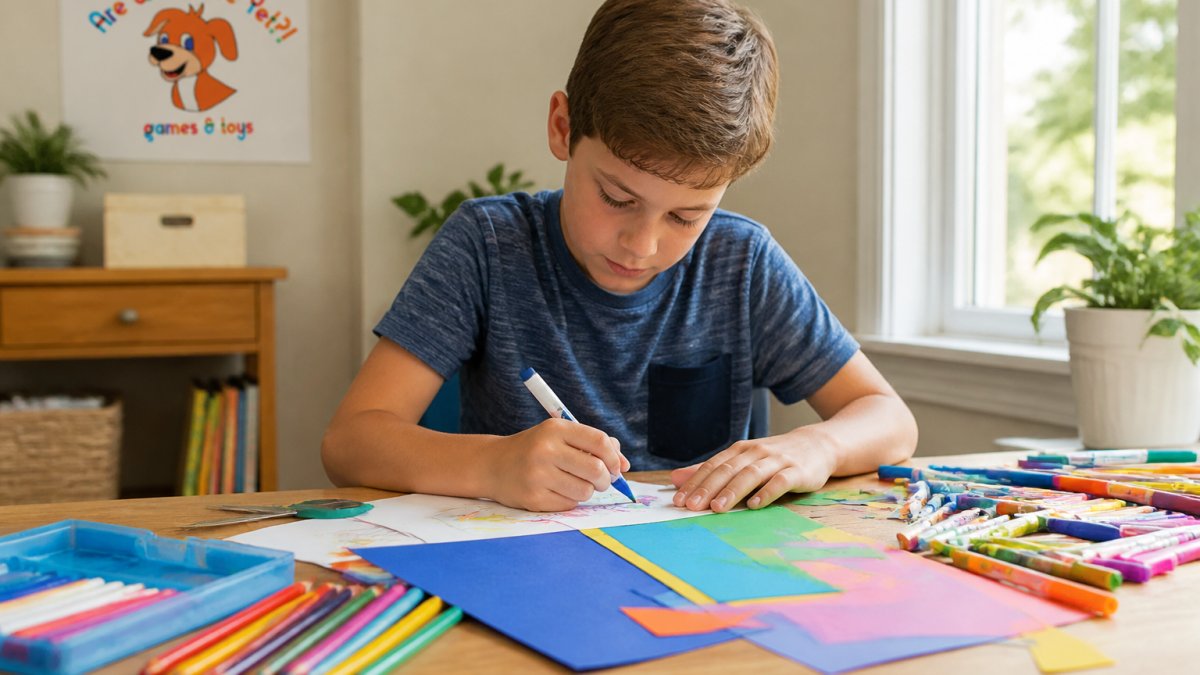
Arts, Crafts, and Building Projects
Arts and crafts engage creativity while keeping hands busy. Kids this age love making things they can use or display.
Try these craft ideas:
- Friendship bracelets (string, beads, or embroidery floss)
- Paper origami or folded paper crafts
- Decorating journals or sketchbooks
Building projects work just as well, LEGO sets, wooden blocks, or cardboard construction keeps kids focused for hours because they're creating something tangible.
Reading, Writing, and Creative Storytelling
Reading and writing activities tap into imagination. Many nine-year-olds are strong readers but haven't discovered their favorite genres yet.
Encourage these activities:
- Starting a journal or diary
- Writing and illustrating their own short stories
- Creating comic strips or graphic novels
Writing prompts work well: give them a starter ("You find a mysterious door..." or "Your best friend suddenly has a superpower...") and let them run with it.
Cooking and Baking Together
Cooking and baking together teaches real skills while producing something edible. Kids feel proud when they've made a meal or treat.
Simple recipes that work:
- No-bake cookies or energy balls
- Pizza (let them choose toppings)
- Smoothies or milkshakes
The activity teaches measurements, following directions, and cause-and-effect. Plus, they get to eat the results. Cleanup is part of the lesson, too.
Outdoor Activities for 9 Year Olds: Adventure and Exploration
Outdoor activities for 9 year olds burn energy while building confidence and independence. Kids this age are ready for more adventurous play.
Active Play and Sports
Active play keeps kids physically healthy and mentally sharp. Nine-year-olds often have strong opinions about what they like.
Popular outdoor activities include:
- Riding bikes or scooters
- Playing basketball, soccer, or other team sports
- Roller skating or skateboarding
Let them choose activities they genuinely enjoy. A kid who loves skateboarding will practice for hours; one forced into soccer will drag their feet.
Nature and Gardening Projects
Nature activities connect kids to the outdoors and teach responsibility. Gardening is surprisingly engaging for this age group.
Try these nature activities:
- Planting a small garden or flower bed
- Caring for plants or flowers
- Bug hunting or nature observation
Gardening teaches patience: kids plant seeds, water regularly, and watch things grow. Even a small pot of herbs on a windowsill works.
Independent Activities for Kids This Age
Independent activities for kids build confidence and self-direction, and nine-year-olds are ready to spend time alone without constant guidance.
Good independent activities include:
- Reading books matched to their interests
- Building LEGO sets or model kits
- Drawing or painting
The key is giving them choices: a kid who picks their own book or project stays engaged longer than one assigned an activity.
Road Trip Games for Kids: Keeping Boredom Away
Road trip games for kids are essential for long drives. The best travel games for kids keep everyone entertained without needing a lot of space or setup.
Portable Card Games and Puzzles
Card games are perfect for road trips: compact, reusable, and endlessly entertaining. A good one can occupy kids for hours.
Go Poop! is designed exactly for this: a matching card game where players collect sets of three, a magical creature, its favorite treat, and its colorful poop.
Other portable options:
- Standard playing cards (games like Crazy Eights or Go Fish)
- Travel-sized board games
- Magnetic puzzle games
Travel-sized puzzles (100-300 pieces) also keep hands busy and minds focused.
Travel-Friendly DIY Activities
DIY activities require minimal supplies but maximum creativity. Pack a small bag with basics and let kids create.
Bring these supplies:
- Colored pencils or markers
- Blank paper or a sketchbook
- Sticky notes for games or drawing
The advantage is flexibility: a sketchbook and colored pencils can entertain a nine-year-old for hours.
Go Poop! Silly Card Game for Kids on the Go →
Activities Organized by Time, Budget, and Setup
Most activity lists tell you what to do but not whether you can pull it off in the next twenty minutes with what's already in the house. Use the filters below to match an activity to your actual constraints, time, money, and prep.
The Three-Question Filter
Before picking anything, answer these three questions:
- How much time do we actually have? A 15-minute window before dinner is not the same as a free Saturday afternoon. Be honest about transitions and cleanup.
- What's the budget? Zero-dollar activities are not lesser activities. Many of the best options for nine-year-olds cost nothing.
- How much setup and supervision can I give right now? A craft that needs a hot glue gun is a different commitment than a deck of cards.
Time-Based Picks
| Window | Best-Fit Activities | Realistic Setup | Cleanup |
|---|---|---|---|
| 10-15 minutes | Card games, drawing prompts, word games, stretching | Under 2 minutes | Under 2 minutes |
| 30 minutes | Simple crafts, 100-piece puzzles, building a small LEGO set, journaling | 3-5 minutes | 5 minutes |
| 1-2 hours | Baking a batch of cookies, gardening, bike riding, a full craft project | 10 minutes | 10-15 minutes |
| Half day or more | Hiking, a big building project, cooking a full meal together, a group outing | 15-20 minutes | 15+ minutes |
A common pattern: the activities kids return to most have the shortest setup. A deck of cards or a sketchbook beats an elaborate kit that takes twenty minutes to unpack.
Budget Tiers
$0, Already in the house:
- Drawing and doodling with pencils or crayons
- Library books (free with a library card)
- Card games with a standard deck
Under $15, Small one-time buys:
- A travel-sized puzzle (100-300 pieces)
- A sketchbook and a set of colored pencils
- Sidewalk chalk
$15-$40, Bigger investments:
- A mid-size LEGO or building set
- A beginner gardening kit with seeds and pots
- A basic science experiment kit
$40+, Occasional splurges:
- Sports equipment (a bike, a scooter, a basketball)
- A musical instrument for beginners
- A larger building or model kit
You do not need the expensive tier to keep a nine-year-old engaged. The free and under-$15 tiers cover most of what this age group actually enjoys.
Prep-Level Guide
No-prep (grab and go): card games, drawing, journaling, word games, reading. These work in a waiting room, a restaurant, or the back seat.
Light prep (under 5 minutes): printing a writing prompt, pulling out craft supplies, setting up a puzzle. Good for a rainy afternoon when you want something fast.
Planned prep (10-20 minutes): baking, gardening, a structured craft, a science experiment.
Quick 15-Minute Activities
Short windows call for activities with instant starts and instant stops:
- Card games (a standard deck covers Crazy Eights, Go Fish, and more)
- Drawing or doodling with a prompt
- Word games, riddles, or memory games
These require zero prep and pack away in under two minutes.
Budget-Friendly and No-Prep Options
The cheapest activities are often the most engaging because they leave room for imagination:
- Drawing with pencils or crayons
- Reading library books
- Playing outside, tag, climbing, biking
A cardboard box, a few markers, and an hour of unstructured time will outperform most purchased kits. The constraint isn't money, it's having a short list ready when boredom hits.
Small-Group and Social Activities for Nine Year Olds
Social activities build friendships and teach teamwork. Nine-year-olds enjoy activities with peers.
Good group activities:
- Team sports (soccer, basketball, baseball)
- Group games (charades, Pictionary, board games)
- Building or creating together (group art project, building fort)
These activities teach cooperation and communication. Kids learn to follow rules, take turns, and work toward a shared goal.
Safety, Supervision, and Accessibility
Nine-year-olds are ready for more independence, but "more independent" isn't the same as "unsupervised." The right supervision level depends on the activity, the child, and the setting, here's a practical framework instead of a blanket rule.
Match Supervision to the Activity
| Activity Type | Suggested Supervision | Why |
|---|---|---|
| Card games, drawing, journaling, reading | Check in every 20-30 minutes | Low physical risk; check in for fairness and frustration |
| Crafts with scissors or glue | Adult nearby | Tool use and mess control |
| Cooking and baking | Adult present and involved | Heat, sharp tools, and raw ingredients |
| Building with small parts | Adult nearby for ages under 10 | Choking risk for younger siblings; frustration support |
| Bike riding, scooters, skateboarding | Adult present, helmet required | Traffic, falls, and speed |
| Water play and swimming | Capable adult within arm's reach | Drowning risk is real at every age (the CDC) |
| Hiking and nature walks | Adult present, stay on marked trails | Getting lost, terrain, and weather |
| Gardening | Light supervision | Tools, soil, and possible plant irritants |
A useful rule of thumb: the more heat, height, water, or sharp tools involved, the closer the adult should be. For low-risk activities, periodic check-ins preserve independence while keeping you aware.
Practical Supervision Notes
- Cooking and baking: Keep a fire extinguisher within reach, turn pot handles inward, and let kids stir and measure while you handle the oven and stove. Nine-year-olds can do most mixing, measuring, and decorating tasks with an adult in the room.
- Outdoor exploration: Agree on boundaries before kids go out, which yards, which block, which trail. A simple check-in rhythm (every 20-30 minutes) works better than constant hovering.
- Tools and building: Introduce one tool at a time. A hot glue gun, a craft knife, or a power drill each needs a short demonstration and a first supervised use before independent handling.
Adapting Activities for Different Needs
Most activities on this list can be adjusted so more children can take part. The goal is engagement, not a perfect performance.
For fine motor challenges:
- Choose larger puzzle pieces or magnetic puzzles
- Use thicker markers, crayons, or pencil grips
- Swap intricate crafts for stamping, tearing, or large-format drawing
For reading or writing difficulty:
- Offer audiobooks alongside print books
- Use speech-to-text for story writing
- Try wordless graphic novels or heavily illustrated books
For sensory sensitivities:
- Skip messy textures (slime, finger paint) in favor of dry materials
- Offer noise-reducing headphones for group games or outings
- Provide a quiet corner for breaks during social activities
For mobility differences:
- Swap hiking for flat, paved nature trails or garden exploration
- Choose seated sports and games (card games, tabletop building, adaptive sports)
- Set up crafts at a comfortable table height with supplies within reach
For attention and regulation differences:
- Break longer activities into 10-15 minute chunks with movement breaks
- Post simple visual steps for multi-step projects
- Offer a choice between two activities rather than an open-ended list
A Simple Safety Checklist
Before starting any activity, run through these four questions:
- What could go wrong here? Heat, water, height, sharp tools, small parts, traffic.
- Who is watching, and how closely? Match supervision to the risk level.
- Does the child know the boundaries? Where they can go, what they can use, when to check in.
- Is there a plan for a problem? A first-aid kit nearby, a phone charged, a known meeting point.
Most activities for nine-year-olds are low-risk when the adult has thought through these four questions in advance. The point isn't to hover, it's to set up the activity so the child can focus on fun while you watch the parts that matter.
Frequently Asked Questions
What are some engaging activities for 9 year olds that don't involve screens?
Nine year olds thrive with screen-free activities like building projects with Lego or cardboard, drawing and painting, reading, writing stories, cooking with a parent, outdoor sports, gardening, puzzles, and card games. These activities develop creativity, problem-solving, and social skills while keeping kids entertained for hours. The key is variety, rotate between active play, creative projects, and quieter independent activities to match their mood and energy level.
How long can engaging activities for 9 year olds actually hold their attention?
Most nine year olds can focus on a single engaging activity for 30 minutes to an hour, depending on interest level and difficulty. Building projects, arts and crafts, and games tend to hold attention longest because they offer progress and a clear goal. Shorter activities like 15-minute games or quick crafts work well for transitions or waiting times. Combining activities, like a game followed by a snack, then a craft, extends overall engagement throughout the day.
What independent activities work best for 9 year olds?
Nine year olds can handle independent activities like reading, journaling, drawing, building with Lego, solving puzzles, science experiments, and photography. At this age, they're developing focus and can work alone for 20-45 minutes on tasks that interest them. Provide clear instructions or a simple guide, set a loose time frame, and check in occasionally. Independent activities build confidence and give parents a break while keeping kids productively occupied.
What games keep 9 year olds entertained on long road trips?
Portable card games, travel-sized board games, magnetic puzzles, and activity books work best for road trips. Compact games like Go Poop! offer silly, engaging gameplay that holds attention without taking up much space. Mix in audiobooks, window games (like spotting license plates), and rotating activities every 30-45 minutes to prevent boredom. Bring a variety so kids don't tire of the same game over hours of travel.


