

Screen-Free Travel Ideas for Toddlers: 30+ Activities
Table of Contents
- Why Screen-Free Travel Ideas Matter for Toddlers
- Screen-Free Activities for Toddlers on a Plane
- Toddler Road Trip Activities Without Screens
- Travel Toys for Toddlers: Portable and Compact Options
- Mess-Free Toddler Travel Activities
- Age-Specific Guidance: What Works for Different Toddler Stages
- Safety, Supervision, and Practical Travel Tips
- Frequently Asked Questions
Last Updated: October 7, 2026
Why Screen-Free Travel Ideas Matter for Toddlers
Travel with toddlers can feel overwhelming. At Are We There Yet, we've seen screen free travel ideas for toddlers transform these moments from stressful to joyful.
Screen time during travel is tempting, but once kids get used to screens on trips, they expect them every time.
Hands-on activities, games, and toys that spark curiosity keep toddlers occupied longer than you'd expect. This guide covers 30+ proven screen free travel ideas for toddlers that actually work.
Screen-Free Activities for Toddlers on a Plane
Flying with toddlers requires activities that are contained, quiet, and easy to manage at 30,000 feet.
The ideal plane activity is compact, mess-free, and engaging enough to hold attention through one flight segment. Start simple when kids are fresh and save novelty items for when energy dips.
Sticker Books and Reusable Stickers
Sticker books are a plane staple: quiet, contained, and good for 20-30 minutes of independent play. Reusable sticker books beat permanent ones on flights, kids peel, place, and reposition stickers without waste or mess, and most toddlers ages 3 and up can handle them solo. Pack at least two per flight segment and introduce the second only when interest in the first drops, which prevents the "I'm bored" moment at cruising altitude.
Magnetic Toys and Building Activities
Magnetic tiles and building blocks work well on planes if you avoid loose pieces that roll under seats. Magnetic toys keep toddlers engaged in open-ended play with no "right" way to build, so frustration stays low. Bring a small zippered bag to contain pieces, a travel set of 12-20 tiles is enough for extended play without taking up carry-on space.
Audiobooks and Storytelling
Audio is an underrated travel tool. Quality toddler audiobooks like Pete the Cat, Llama Llama, or Daniel Tiger's Neighborhood hold attention without screens for ages 2-5. Pair them with a comfort item like a blanket or stuffed animal to signal "calm time," and many toddlers drift to sleep.
Toddler Road Trip Activities Without Screens
Road trips offer more space and flexibility than flights, but the challenge is preventing boredom over hours, not minutes. Successful strategies involve rotation, novelty, and activities that work at different energy levels, mixing quiet entertainment with movement during rest stops.
Road Trip Games and Card Games
Simple games designed for car play are worth their weight in gold. The best ones need no board, have pieces that won't scatter, and pause and resume easily.
Are We There Yet's Go Poop! card game is built for exactly this scenario.
The compact size fits anywhere, under a seat, in a backpack, or a car door pocket, with no pieces to lose and no setup needed.
Window Games and Observation Activities
Window games cost nothing and work surprisingly well. "I Spy" is the classic, but color hunts, license plate bingo, and animal spotting keep it fresh. These games turn scenery into entertainment and work for all ages, so toddlers can play alongside older siblings. Create simple laminated cards with pictures of things to spot, cows, horses, red cars, water towers, or bridges, and kids mark off items as they see them.
Snacks as an Activity and Distraction
Snacks aren't just fuel, they're an activity. Pack a variety, crackers, dried fruit, cheese, pretzels, and special treats kids don't get at home, portioned into small containers, and introduce new snacks at predictable low-energy moments, usually mid-morning and mid-afternoon. Letting kids choose from options extends the activity beyond just eating. Avoid sugar-heavy snacks that spike energy then crash; protein-based snacks like cheese, nuts for older kids, and yogurt sustain energy better, and regular water prevents dehydration and fussiness.
Travel Toys for Toddlers: Portable and Compact Options
The best travel toys fit in a backpack or car seat pocket. Size, weight, and durability all matter because these toys will get heavy use.
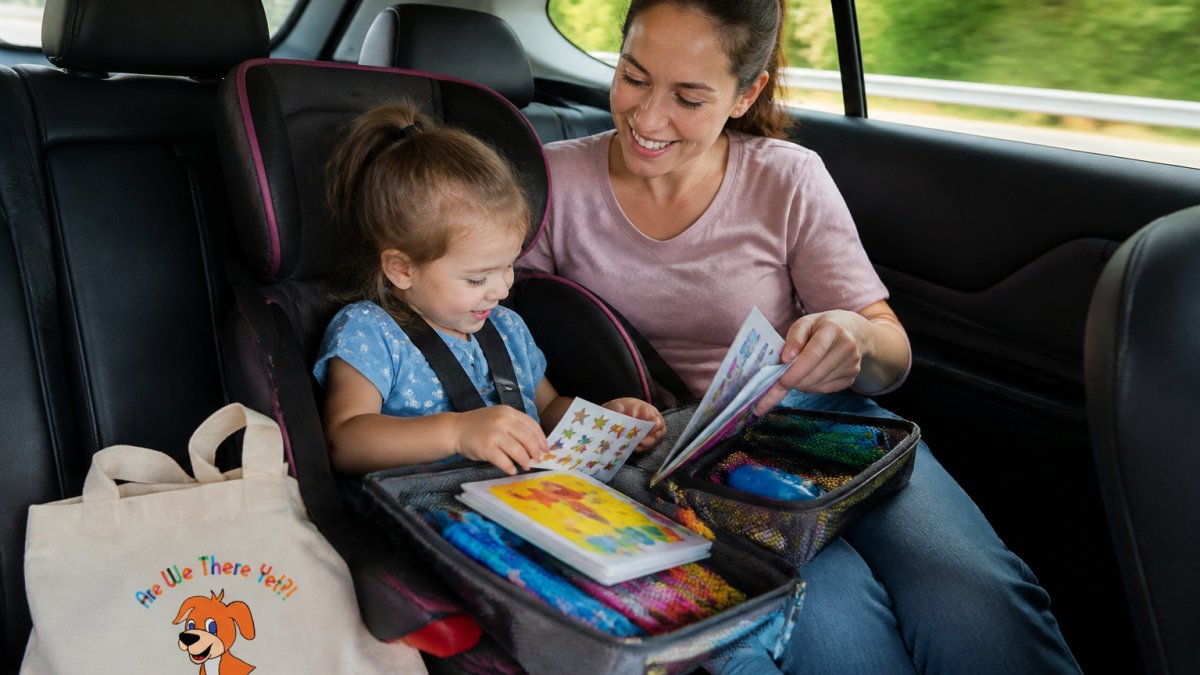
Soft Toys and Light-Up Toys
Soft toys provide comfort and quiet engagement, a small stuffed animal gives toddlers something to hold, cuddle, or use in imaginative play, and is especially valuable for anxious travelers. Light-up toys add sensory interest: small LED toys, glow sticks, or light-up fidgets capture attention without noise, particularly during evening travel. Choose toys without batteries that might die mid-trip, or pack extras, and favor multi-function items (soft AND squeaky, or soft AND crinkly) over single-purpose ones.
Busy Bags and Activity Kits
A busy bag is a collection of small activities assembled in one container, a curated experience, not a toy. Busy bags work best when they're somewhat mysterious, so opening the bag feels like an event. Fill a small zippered bag with 5-7 items: a small notebook and pencil, sticker sheets, a small puzzle, a card game, a fidget toy, and one novelty item kids haven't seen. Introduce it when energy is flagging.
Mess-Free Toddler Travel Activities
Travel means limited space, no sink access, and nowhere to clean up spills. Mess-free activities are non-negotiable. They're also easier on everyone's stress levels.
Water-Reveal Coloring Books
Water-reveal coloring books are genius for travel. Kids use a water pen (filled with water, not ink) to "paint" on special paper; the color appears as the water touches the page, then disappears when the page dries so kids can color it again. These books are completely mess-free, no markers that dry out, no spills, no stains, no cleanup. Pack one or two per trip with the water pen.
Mess-Free Drawing and Painting Tools
Dry-erase boards and markers are travel staples for a reason. Kids draw, erase, and draw again. No paper waste. No mess.
Bring a small dry-erase board (8x10 inches is ideal) and a few dry-erase markers. Include a small cloth or sponge for erasing. This setup entertains for surprisingly long periods.
Alternatives include:
- Magna-Doodle boards (magnetic drawing surfaces)
- Chalkboards with chalk (slightly messier but contained)
- Reusable sticker scenes (kids arrange stickers, then peel and rearrange)
Each option is portable, reusable, and mess-free. The key is choosing one or two and mastering them rather than packing a dozen different options.
Go Poop! Silly Card Game for Kids on the Go →
Age-Specific Guidance: What Works for Different Toddler Stages
Not all activities work for all ages. What entertains a 2-year-old frustrates a 5-year-old. Understanding what clicks at each stage helps you pack smarter and travel smoother.
Ages 2-3: Simple, Hands-On Play
Two- and three-year-olds need simple activities with clear cause-and-effect, sensory input, and hands-on engagement, not complex games or long attention spans.
Best activities for this age:
- Sticker books (reusable)
- Soft toys and plush items
- Water-reveal coloring books
- Simple board books
- Snacks and finger foods
- Magnetic tiles or blocks
- Audiobooks paired with comfort items
Keep activities short. Rotate frequently. At this age, novelty and variety prevent boredom better than depth. A new activity every 15-20 minutes works better than one activity for an hour.
Ages 4-5: Games and Independent Play
Four- and five-year-olds are ready for simple games and more independent play. They can follow basic rules, take turns, and entertain themselves for longer periods.
Best activities for this age:
- Card games (Go Fish, Uno, Go Poop!)
- Magnetic tiles and building activities
- Sticker books and reusable stickers
- Window games and observation activities
- Dry-erase boards and markers
- Simple puzzles
- Audiobooks
This age group benefits from games with siblings or parents but can also engage in solo play, mix both types.
Ages 6-8: Strategy Games and Challenges
Older toddlers and early elementary kids want challenge and strategy. Simple games feel babyish. They're ready for games with more complex rules and longer play times.
Best activities for this age:
- Card games with strategy elements
- Travel-sized board games
- Puzzle books and activity books
- Window games with scoring
- Audiobooks (longer, more complex stories)
- Travel journals (kids draw or write about the trip)
- Observation challenges
This age group also benefits from having a role or responsibility. Let them navigate using a map, keep a travel journal, or track the itinerary. Engagement increases when they feel involved in the trip itself.
Safety, Supervision, and Practical Travel Tips
Screen-free travel isn't just about activities. It's about creating an environment where activities work. Safety, organization, and realistic expectations matter.
Keeping Activities Contained and Organized
Organization prevents chaos. Use small bags or containers for each activity and label them if traveling with multiple kids; when one activity is done, that container goes away before the next comes out. Magnetic toys need a container to prevent scattering, sticker books need a flat surface like a lap desk or small tray, and card games need a stable surface.
Activity Rotation and Timing Strategy
Rotation is your secret weapon, don't introduce all activities at once. Start travel with a simple, familiar activity kids have done before and enjoy; this settles them and establishes a calm tone. Introduce new or novelty activities when energy dips, usually 20-30 minutes after starting (short flights) or mid-morning and mid-afternoon (road trips). Pair activities with natural breaks: after snack time, introduce a game; after a window game, switch to sticker books; after coloring, try a card game.
Low-Cost and Household Alternatives
You don't need to buy everything. Household items work surprisingly well as travel activities.
Low-cost alternatives include:
- Notebook and pencil (drawing, writing, games like Hangman)
- Playing cards (Go Fish, Crazy Eights, simple matching)
- Books from your home library
- Pipe cleaners (kids shape them into creations)
- Clothespins (kids clip them to car seat straps or bag handles)
- Small containers with buttons or pasta (sorting and scooping)
- Tape (painter's tape or masking tape for window play)
These items cost almost nothing but entertain effectively. Combine them with one or two purchased activities (like Go Poop!) for a balanced, budget-friendly travel kit.
Travel with toddlers doesn't require screens or expensive gadgets, it requires planning, variety, and activities that match your child's age and interests.
Screen-free travel is possible with the right tools and realistic expectations.
Frequently Asked Questions
How do you keep a toddler entertained on a plane without a screen?
Combine multiple activities to prevent boredom: sticker books, magnetic tiles, card games like Go Poop!, audiobooks, and window games. Introduce new activities every 30-45 minutes to maintain engagement. Pack a busy bag with small toys, coloring supplies, and travel games. Snacks also serve as both a distraction and activity. The key is variety and rotating between quiet and more interactive options throughout the flight.
What are the best screen-free activities for toddlers on a road trip?
Road trips work well with games that don't require much space: card games, travel bingo, I-spy window games, and audiobooks. Soft toys and magnetic toys keep hands busy without mess. Snack sorting and eating activities provide natural breaks. Portable card games designed for travel, like those from Are We There Yet, fit easily in car seats and keep kids engaged for extended periods without needing a screen.
Are mess-free toddler travel activities really mess-free?
Water-reveal coloring books, sticker books, and magnetic toys are genuinely mess-free options. They don't require markers, paint, or loose pieces that spill. Snacks can be managed with small containers. The key is choosing activities that contain everything within the toy itself or a small designated area. Avoid traditional markers, paints, and activities with many small pieces that are hard to contain in a moving vehicle.
How often should I introduce a new activity during a long trip?
Rotate activities every 30-45 minutes to keep toddlers engaged. Younger toddlers (ages 2-3) may need more frequent changes, while older kids (ages 6-8) can focus longer on strategy games. Start with simpler activities and save card games for later in the trip when restlessness peaks. Save your best surprise activities for when energy flags most, typically mid-trip or during delays.


