

Portable Games for Family Road Trips: A 2026 Guide
Table of Contents
- Why Portable Games Matter for Family Road Trips
- Road Trip Games for Kids by Age and Developmental Stage
- Best Card Games for Road Trips
- No-Prep Road Trip Games That Require Nothing
- Screen-Free Travel Activities for Kids Beyond Games
- Choosing the Right Portable Games: Size, Setup, and Budget
- Common Mistakes Parents Make When Packing Portable Games
- Frequently Asked Questions
Last Updated: October 5, 2026
Why Portable Games Matter for Family Road Trips
Long car rides test every parent's patience, and you're soon scrambling to entertain kids without handing over a tablet. This is where portable games for family road trips become invaluable.
Portable games occupy kids' minds without screens, electricity, or complicated setup. They're compact, durable, and engaging enough to hold attention for hours. Families who pack the right games transform road trips from stressful endurance tests into genuine connection and fun.
The difference between a successful road trip and a miserable one comes down to preparation. With the right games on hand, kids stay engaged, parents stay sane, and the whole family enjoys the journey.
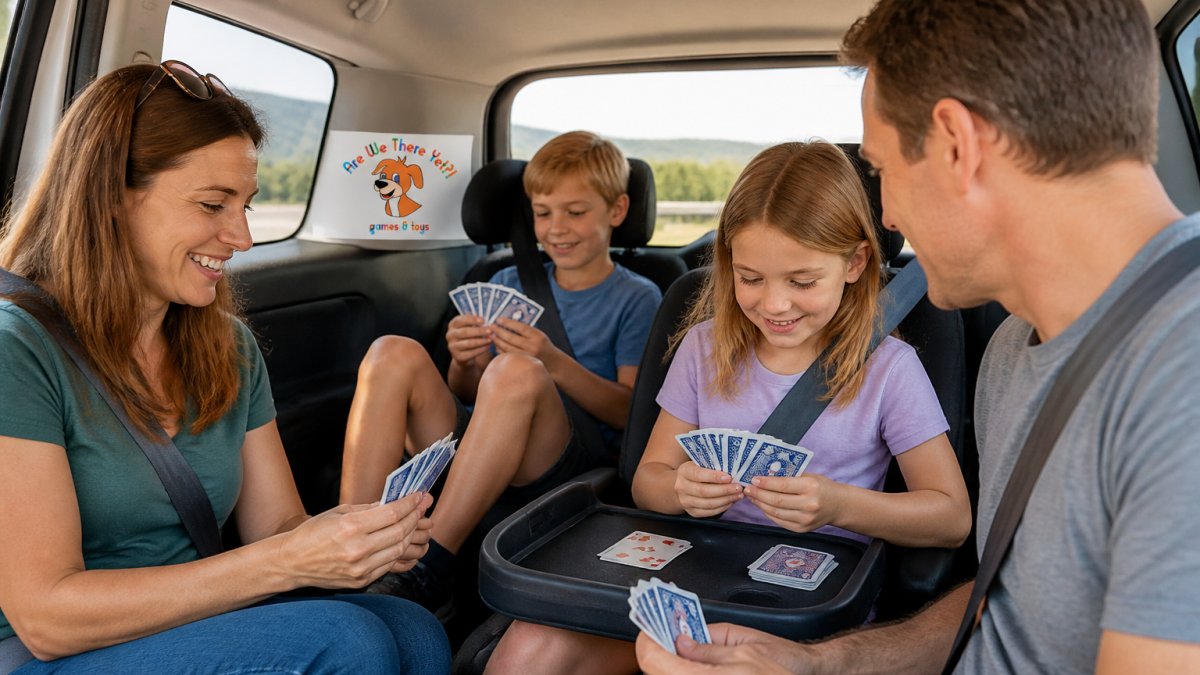
Road Trip Games for Kids by Age and Developmental Stage
Choosing the right game depends on your child's age. A game that captivates a 6-year-old will bore a 10-year-old, and something too complex frustrates younger kids. Here's how to match games to developmental stages.
Ages 4-6: Simple Rules and Bright Colors
Young children need minimal rules and fast rounds. Games lasting longer than 10-15 minutes lose their attention, so bright, colorful cards and whimsical characters keep them visually engaged.
Go Poop! is specifically designed for this age group. It uses a matching mechanic similar to Go Fish but with silly themes that make 4-6 year-olds giggle. The rules are straightforward: collect sets of three cards (a magical creature, its favorite treat, and its poop). Setup takes seconds, and rounds finish quickly. At just $14.99, it's an affordable option that doubles as both a game and a memory-matching activity for younger players who aren't ready for full gameplay yet.
Look for games in this age range that feature:
- Simple matching or turn-taking mechanics
- Bright, appealing artwork
- Quick rounds (under 15 minutes)
- Sturdy cards that survive small hands
- Characters or themes kids find hilarious
Ages 7-9: Strategy Meets Speed
Kids this age grasp strategy but still want fast-paced action. They enjoy slightly more complex rules, as long as setup and learning don't take forever. This is the sweet spot where competitive play becomes fun rather than frustrating.
Games for this group work best when they combine luck with light strategy: turn order matters, but one bad draw doesn't ruin the game. Kids love scoring systems, special cards, and the chance to outsmart opponents.
The best card games for road trips at this level have simple rule sets but enough depth for multiple rounds, finishing in 15-20 minutes without fatigue.
Ages 10-12: Deeper Strategy and Competitive Play
Older kids are ready for real strategic choices. They handle longer games, remember complex rules, and enjoy planning ahead. This age group becomes invested in winning and wants games where skill matters.
Games for this age group can include:
- Tile-laying mechanics
- Hand management and resource decisions
- Scoring systems with multiple paths to victory
- Games lasting 20-30 minutes
- Themes that appeal to their interests (animals, adventure, competition)
Kids this age also appreciate portable games that feel "grown-up", more sophisticated than games for younger kids, but still portable enough for travel.
Best Card Games for Road Trips
Card games are the gold standard for road trip entertainment: compact, durable, and requiring minimal setup. Unlike board games with loose pieces, cards stay contained and won't get lost under car seats.
Why Card Games Win for Travel
Card games require nothing but the cards themselves, no board, dice, or tokens. You shuffle, deal, and play. For families in motion, this simplicity is everything.
Card games also work across age ranges: a family with kids aged 4 to 12 can play together without anyone feeling excluded. Games like Go Poop! adapt to skill levels, with younger kids on basic rules and older kids using bonus cards for strategy.
Durability matters on road trips. Cards get shuffled hundreds of times, dropped on car floors, and handled with sticky fingers, so quality card stock and clear printing beat flimsy alternatives.
What to Look for in a Travel Card Game
The best portable games for family road trips share specific qualities. Look for compact packaging that fits in a small bag or cup holder, and cards sturdy enough to withstand repeated shuffling and spills.
Setup time is critical. If a game takes 10 minutes to explain and organize, kids lose interest before the first turn. Fast-teaching games kids grasp in a minute or two keep momentum going.
Game length matters too. A 45-minute game works at home, but on a road trip 15-20 minutes per game is ideal, letting you play multiple rounds without boredom or fatigue.
Finally, consider noise level. Some games encourage shouting and celebration; others require quiet concentration. Decide whether your family prefers lively, animated play or calmer entertainment.
No-Prep Road Trip Games That Require Nothing
Sometimes you forget to pack games, or you want free activities requiring zero preparation.
I Spy remains undefeated for simplicity and engagement.
License plate counting turns highway driving into a game. Kids track which states' plates they spot and try to find all 50.
Alphabet hunt challenges kids to find letters A through Z on signs, billboards, and license plates in order. It keeps them scanning the environment for hours.
Animal noises works for younger kids. Someone makes an animal sound, others guess which animal. It's silly, requires nothing, and generates lots of laughter.
Counting games work well too. Count red cars, trucks, or specific billboard types. Set a target number and see who reaches it first.
These activities cost nothing and need no advance planning, perfect backups when packed games run out or you want screen-free activities that engage the whole family.
| Activity | Best For | Setup Time | Duration |
|---|---|---|---|
| I Spy | All ages | None | 20-30 minutes |
| License Plate Hunt | Ages 5+ | None | 1-2 hours |
| Alphabet Hunt | Ages 6+ | None | 30-60 minutes |
| Animal Noises | Ages 3-7 | None | 15-20 minutes |
| Counting Games | Ages 4+ | None | 20-30 minutes |
Screen-Free Travel Activities for Kids Beyond Games
Games are just one piece of the screen-free travel puzzle. Mixing in other activities prevents boredom and keeps the journey fresh.
Go Poop! Silly Card Game for Kids on the Go →
Travel activity books take up minimal space and provide hours of engagement.
Notepads and pencils enable creative writing, drawing, or journal entries. Some kids love documenting their trip, sketching what they see, or writing stories. This unstructured creativity keeps minds busy without requiring parent involvement.
Kids' audiobooks and podcasts offer another screen-free option, capturing imagination differently than games or activities. Alternating between active games and passive listening prevents fatigue.
Conversation starters turn the car into a space for real family connection. Ask kids about their dreams, favorite memories, or what they'd do with a superpower, these conversations reveal what's on their minds and create lasting memories.
The key is variety. Switching between games, activities, listening, and conversation prevents any single activity from wearing thin. A mix of active and passive engagement keeps energy levels balanced throughout the trip.
Choosing the Right Portable Games: Size, Setup, and Budget
Not all portable games are equally portable. Some pack down smaller than others, and setup complexity varies widely. Understanding these factors helps you choose games that work for your family's travel style.
Compact Storage and Lap Tray Considerations
Game size matters more than you'd think. Compact games slip into backpacks, cup holders, or seat pockets; larger games need dedicated bag space.
Lap trays give kids a stable surface for cards and game pieces without a full table. A simple lap tray costs $15-30 and lets kids play card games, do activities, or write without balancing everything on their lap.
Consider how many games you're packing. With five games, compact options matter; with one or two, size is less critical. Most families find two to three carefully chosen games cover a full day of travel.
Storage cases protect games during travel. Some come with decent boxes; others benefit from smaller containers. Magnetic games stay contained even if the box opens, and card games in ziplock bags take up minimal space.
Setup Time and Complexity Trade-offs
The fastest games take 30 seconds to start: deal cards, explain one rule, and you're underway. These are perfect for road trips because momentum matters, if setup takes longer than the game itself, kids lose interest.
Games with 2-3 minutes of setup work if the gameplay justifies it; kids will wait if they know a fun game is coming. The problem is long setup paired with a short game.
Complexity also affects replayability. A simple game kids understand instantly can be played repeatedly without frustration; a complex one might work once or twice before kids want something different.
For road trips, favor simpler games. One that works for multiple rounds beats a more sophisticated game kids tire of after a play or two.
Durability and Quality for Repeated Use
Road trip games get heavy use: cards shuffled constantly, handled by multiple people, and sometimes dropped or spilled on. Quality matters because a damaged game becomes unplayable mid-trip.
Look for sturdy card stock that resists bending and creasing. Glossy finishes protect against sticky fingers better than matte finishes. Clear, durable printing survives repeated shuffling without fading.
Games designed for travel often feature reinforced corners and better materials than budget alternatives. The extra durability pays off when a game survives a full summer of road trips.
Consider games you'll use across multiple trips. A well-made game that lasts for years beats cheaper alternatives that fall apart after a few trips.
Common Mistakes Parents Make When Packing Portable Games
Most parents pack too many games. More options don't equal more entertainment, too many choices overwhelm kids and create decision paralysis, so they can't commit to one game.
Packing games without testing them first is another common mistake.
Game fatigue is real: even the best game gets boring after 10 plays in a day.
Packing games that are too advanced or too babyish causes frustration. A game that doesn't match your kids' interests won't hold attention, however well-designed.
Neglecting backup entertainment is risky.
Many parents forget that comfort affects entertainment value. A child who's hungry, uncomfortable, or needs a bathroom break won't enjoy even the best game. Address basic needs first, then introduce games.
Finally, underestimating screen-free connection is a missed opportunity.
Road trips don't have to mean hours of screen time or frustrated kids asking if you're there yet.
Frequently Asked Questions
Will portable games actually keep my kids entertained for a 6-hour road trip, or will they get bored quickly?
Portable games designed for travel work best when you rotate them and match them to your kids' ages and interests. A well-chosen card game can hold attention for 30-60 minutes per session, and combining 2-3 different games gives you 2-3 hours of engaged play. Pair games with no-prep activities like I Spy or alphabet hunts to extend entertainment across longer stretches. The key is variety and the novelty of a game they haven't played before.
What makes portable games for family road trips different from games I can buy at a big retailer?
Travel-specific games are designed with compact storage, durable pieces that won't scatter, and simple rules that work in a moving vehicle. Games like Go Poop feature quick setup and flexible play for mixed ages. Retail games often have loose pieces, require a table, or take 10+ minutes to set up. Travel games prioritize portability and durability so they survive repeated use in cars, planes, and confined spaces.
Are card games good for road trips with kids of different ages?
Yes, when you choose games with flexible rules. Many card games allow younger players to participate in simplified versions while older kids play with added strategy layers. Go Poop, for example, works as a memory-matching game for ages 4-5 and a strategy game for ages 7+. Look for games that explicitly support multiple play styles or have optional rule variations to keep mixed-age siblings engaged together without frustration.
What screen-free travel activities for kids work best besides games?
Combine games with activity books, sticker books, coloring books with dry erase markers, notepads for drawing or writing games, and classic car games like I Spy, counting license plates, or animal noises. These require no setup, fit in a small bag, and break up game time to prevent fatigue. Rotating between games and activities keeps engagement high across long journeys without screens.


