

How to Keep Kids Entertained on Planes: 7 Proven Strategies
Table of Contents
- Start With a Pre-Flight Activity Plan
- Screen-Free Airplane Activities for Kids That Actually Work
- Toddler Activities on a Plane: Keeping Younger Kids Occupied
- What to Pack for Kids on a Flight: The Complete Packing Checklist
- Long Flight Activities for Children: Strategies for 4+ Hours
- Common Mistakes to Avoid When Packing Airplane Activities
- Frequently Asked Questions
Last Updated: October 13, 2026
Start With a Pre-Flight Activity Plan
The best way to keep kids entertained on planes starts before you leave home, parents who prepare in advance report far fewer meltdowns.
Build a simple activity schedule around flight length: a two-hour flight needs one main activity plus a snack break; longer journeys need variety.
Write down 5-7 activities you know work at home, then pack one or two items per category to prevent the "I'm bored" spiral.
Talk to your kids beforehand about what to expect, and let them help choose which games or books to pack.
Screen-Free Airplane Activities for Kids That Actually Work
Screen-free activities are the real game-changer for keeping kids entertained on planes. They hold attention longer, don't drain batteries, and engage hands and mind, as long as they feel fun, not like punishment.
Card Games and Travel Games
Card games are portable, quiet, and work for kids ages four and up. Go Fish teaches basic strategy without overwhelming younger players, while more complex games keep older kids engaged for hours.
Go Poop! is designed for travel: ages four and up, about 15 minutes per round.
Pack 2-3 different card games, variety prevents the "can we play something else?" complaint, and travel-sized games weigh almost nothing.
Books and Coloring Activities
Books are underrated for flights. A new book feels like a gift and can occupy a child for 30-45 minutes.
Coloring books with colored pencils are excellent quiet activities, tactile and creative without being loud. Reusable sticker books are another solid option, since kids can place and peel stickers repeatedly.
Bring a mix: one new book, one favorite book, and one coloring activity.
Surprise Toys and Novelty Items
New toys grab attention in a way familiar ones don't, and you don't need expensive items, dollar-store mini puzzle games, activity books, or small figurines work perfectly.
Wrap each surprise individually, unwrapping is half the fun. Space them out: a wrapped toy every 45 minutes gives your child something to look forward to.
Toddler Activities on a Plane: Keeping Younger Kids Occupied
Toddlers are the hardest passengers to plan for because their needs change hour by hour. The fix is not more toys, it is matching the activity to their current state: tired, wired, hungry, or overstimulated.
Match the Activity to the Mood
Think in four modes and keep one option ready for each.
- Wired and wiggly: window time, a walk to the back of the cabin, or a squeeze toy they can knead. Movement resets a toddler faster than any distraction.
- Tired and fussy: a comfort item, a soft blanket, and a familiar board book read in a low voice. Novelty backfires here.
- Hungry and restless: a slow snack they have to work at, such as a bag of cereal pieces or a peeled clementine. The effort buys you time.
Sensory Activities That Survive a Tray Table
The tray table is tiny and the floor is a lost-item black hole. Choose sensory play that stays contained.
- Reusable sticker books. Toddlers from about 18 months can peel and re-stick. Pack two or three because the novelty fades fast.
- Water-reveal coloring pads. The pen fills with water from a cup, so there is no ink to spill on the seat or their clothes.
- Busy boards and latch toys. Buckles, zippers, and snaps keep small hands working quietly for 10-15 minutes at a stretch.
Skip anything with small loose parts. Anything that fits through a toilet paper tube is a choking risk and will end up under the seat within minutes.
Window Time and Movement Breaks
Window time is free entertainment, but it works best when you give it a job. Point out the wing, the clouds, the tiny roads, and ask your toddler to find something red or count three clouds.
Movement breaks matter more for toddlers than any other age. Plan an aisle walk every 60-90 minutes when the seat-belt sign is off. A toddler who has burned off energy will sit still longer afterward.
Snacks as an Activity, Not Just Food
For toddlers, eating is entertainment. Offer small portions on a schedule rather than one big meal, a few crackers, then grapes, then a cheese stick.
Avoid sugary snacks right before you want them to nap. Save the treat for the descent, when ear pressure makes everyone miserable and a lollipop or a gummy helps them swallow.
Comfort Items and Sleep Cues
A favorite stuffed animal or blanket is the single most reliable tool you have. Bring the exact item they sleep with at home, and replicate their bedtime routine, sound machine, book, and all, as closely as the cabin allows.
If the flight crosses their normal nap window, start the wind-down 20 minutes early: blanket out, lights dimmed, quiet voice. A toddler who naps even 45 minutes is a different traveler for the rest of the flight.
Motion Sickness and Bathroom Planning
Toddlers get motion sick more easily than older kids because they cannot always tell you what is wrong. Watch for yawning, paleness, or sudden clinginess.
Pack a spare set of clothes for the toddler and one for you in a resealable bag, spills, diaper leaks, and motion sickness happen at the worst moment.
What to Pack for Kids on a Flight: The Complete Packing Checklist
A thoughtful carry-on bag keeps kids entertained on planes and makes your trip smoother. Here's what to pack.
Go Poop! Silly Card Game for Kids on the Go →
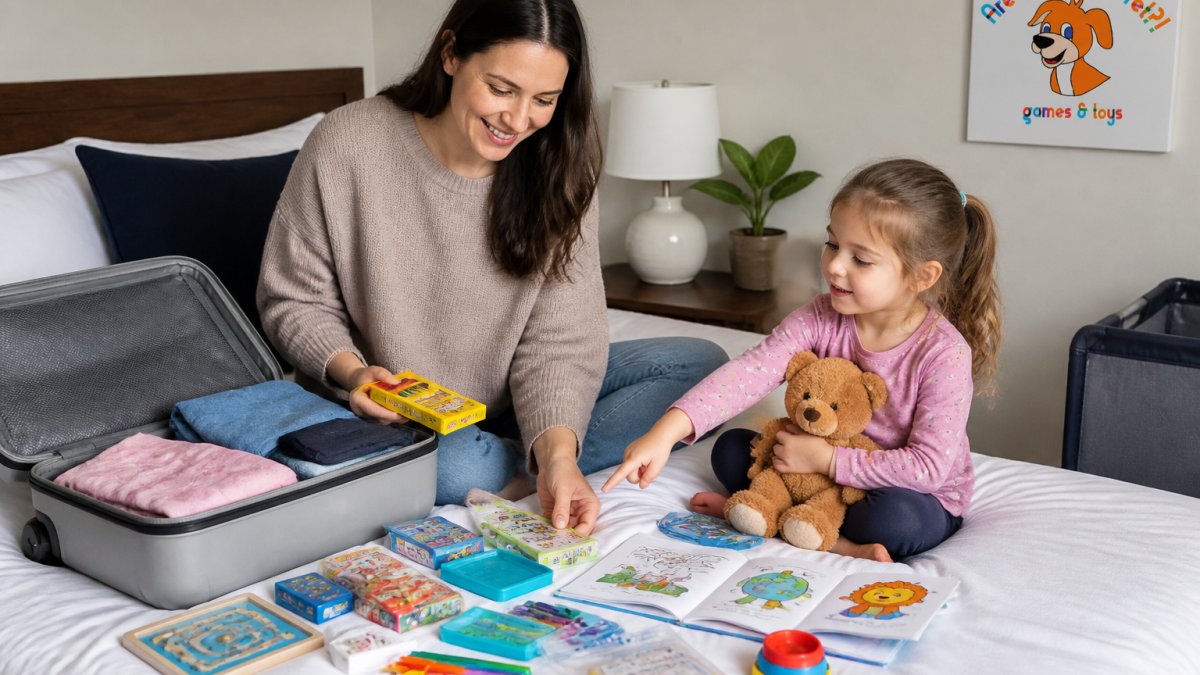
Activity Bag Contents:
- 2-3 card games or travel games
- 1-2 books (mix of new and familiar)
- 1 coloring book with colored pencils
Comfort Items:
- Favorite stuffed animal or blanket
- Neck pillow for napping
- Change of clothes (in case of spills)
Snacks and Drinks:
- Crackers, dried fruit, or granola bars
- Gum or lollipops for ear pressure relief
- Empty water bottle (fill after security)
Practical Items:
- Headphones (if you allow screen time)
- Tablet or device (as backup only)
- Medications if needed
Keep everything in a small backpack or zippered bag that fits under the seat in front of you. This keeps items organized and within reach. Avoid overpacking. A few high-quality activities beat a bag stuffed with random toys.
Long Flight Activities for Children: Strategies for 4+ Hours
A four-hour flight and a ten-hour flight are not the same problem. Most parents pack for the longest possible trip and burn through everything in the first two hours. Instead, build a schedule that matches the actual flight length.
Build the Schedule Before You Board
Write down the flight length, departure time, and your child's nap and meal windows, then block the flight into 30-45 minute segments. Each gets one activity, snack, or rest period, with nothing repeating back to back.
The goal is not a rigid timetable but a rhythm you can fall back on when your child asks "what's next?"
Short Flights (Under 3 Hours)
Short flights are won or lost at the gate. You need two or three items that are easy to pull out and put away, not a deep activity bag.
- Boarding to takeoff: one snack and one small quiet toy. Keep them in your lap, not in the bag.
- Cruise: one main activity, such as a coloring book or a card game, plus a second snack.
- Descent: a lollipop or gummy for ear pressure, plus a comfort item.
Do not open the surprise toys on a short flight. Save them for the return trip or a longer journey.
Medium Flights (3 to 6 Hours)
This is where pacing starts to matter: roughly one activity per hour, with a snack between each.
- Hour 1: a new book or a card game. Something with a little novelty.
- Hour 2: snack, then a coloring or sticker activity.
- Hour 3: a wrapped surprise toy. This is usually the point where energy dips.
Long Flights (6+ Hours)
Long-haul flights need a real plan because you cannot out-entertain a child for eight hours. Alternate active and passive time, and protect sleep.
- First two hours: novelty. New book, new game, surprise toy. Spend your best material early while everyone is still fresh.
- Middle hours: this is the sleep window. Dim the window shade, put on the comfort item, and treat it like bedtime. If your child will not sleep, switch to low-stimulation activities: an audiobook with headphones, a sticker book, or a quiet puzzle.
- Final two hours: re-engage. A snack, a walk, a card game, and then the descent routine.
On flights longer than eight hours, plan at least one full reset: a meal, a bathroom trip, an aisle stretch, and a change of clothes if needed. A reset prevents the meltdown that ends the flight badly for everyone.
Rotate, Do Not Dump
The most common long-flight mistake is emptying the bag in the first hour. Introduce one item at a time, and put it away before bringing out the next.
Keep a small "emergency" stash, one wrapped toy and one favorite snack, untouched unless things are genuinely falling apart. Most flights you won't need it; the ones where you do, it saves the trip.
Plan Around Meals and Sleep, Not Against Them
Airline meal service is a built-in 20-30 minute activity and a natural transition point. After the meal, expect a lull, the right time for a quiet activity or nap attempt, not a new game.
If your flight crosses time zones, decide in advance whether to keep your child on home time or shift them to destination time.
Common Mistakes to Avoid When Packing Airplane Activities
Parents often make the same packing mistakes that undermine their flights.
Mistake 1: Packing Too Many Items More stuff doesn't equal better entertainment.
Mistake 4: Packing Messy Activities Avoid activities that create crumbs, spills, or sticky messes.
Keeping kids entertained on planes doesn't require expensive gadgets or elaborate plans.
Are We There Yet makes this easier with portable, screen-free games designed for travel.
Frequently Asked Questions
What are some fun activities for toddlers on a plane?
Toddlers do best with simple, hands-on activities that don't require reading skills. Sticker books, reusable sticker sheets, and picture books with bright colors hold attention well. Soft toys or a comfort item like a blanket help younger kids feel secure. Games like Go Poop! (designed for ages 4+) work for preschoolers because the colorful cards and silly theme keep them engaged without complex rules. Snacks and a special toy saved just for the flight also work surprisingly well.
How can I keep a toddler occupied during a flight without screens?
Pack a rotating mix of activities so nothing gets old during the flight. Start with a new toy or game they haven't seen before, then switch every 30-45 minutes. Combine quiet activities (coloring, stickers, books) with movement breaks when safe (walking to the restroom, stretching in your seat). Snacks and meals naturally break up the day. A comfort item like a stuffed animal or blanket helps toddlers stay calm, especially during nap time.
What should I pack to keep my child busy on a plane?
Bring a mix of activities: portable card games or travel games, coloring books and markers, sticker books, picture books, and a few surprise toys wrapped individually. Include snacks and a water bottle. Pack a comfort item (blanket, stuffed animal) and consider a neck pillow for napping. Keep everything compact and organized in a small bag or activity organizer. Avoid anything with small pieces that could get lost under seats, and skip noisy toys out of courtesy to other passengers.
How often should I switch activities during a long flight?
Rotate activities every 30-45 minutes on flights longer than 2-3 hours. This keeps restlessness at bay and prevents boredom from setting in. Time activity switches around meals, snack time, and potential nap windows. For a 6-hour flight, you might have 8-10 different activities available, rotating through them as needed. Older children (8-12) can handle longer stretches with one activity, while toddlers need more frequent switches to stay engaged.


